
ResearchGlobal Macro
A Stronger Currency Creates Winners and Losers
- Report or archive date
- Archive placement June 24, 2026
- Reading time
- 2 min read

Summary
The same exchange-rate move can help a consumer, hurt an exporter, and change a portfolio return.
Exchange rates connect prices, cash flows, and balance sheets across borders. Their effects depend on the currency in which an obligation is paid and the currency in which income is earned. Calling a currency simply strong or weak leaves most of the economically useful questions unanswered.
Map the actual exposure
A company selling overseas can have foreign revenue, foreign costs, foreign debt, and currency hedges. Looking only at the location of its headquarters misses these offsets. Financial statements and their notes provide the starting point for identifying the relevant cash flows and obligations.

Imagine a U.S. company with euro revenue and dollar costs. A stronger dollar reduces the dollar value of unchanged euro sales. If the company also pays suppliers in euros, some of that effect is offset. If it raises local prices, the translation impact may improve while demand weakens. The final earnings result depends on all three responses.
An energy importer can face a similar interaction at the national level. An unchanged dollar commodity price becomes more expensive in local currency when that currency depreciates. A country with stronger export receipts may be better able to absorb the increase than one with large foreign-currency obligations and limited reserves.

Local-Currency Returns vs. Currency Effects
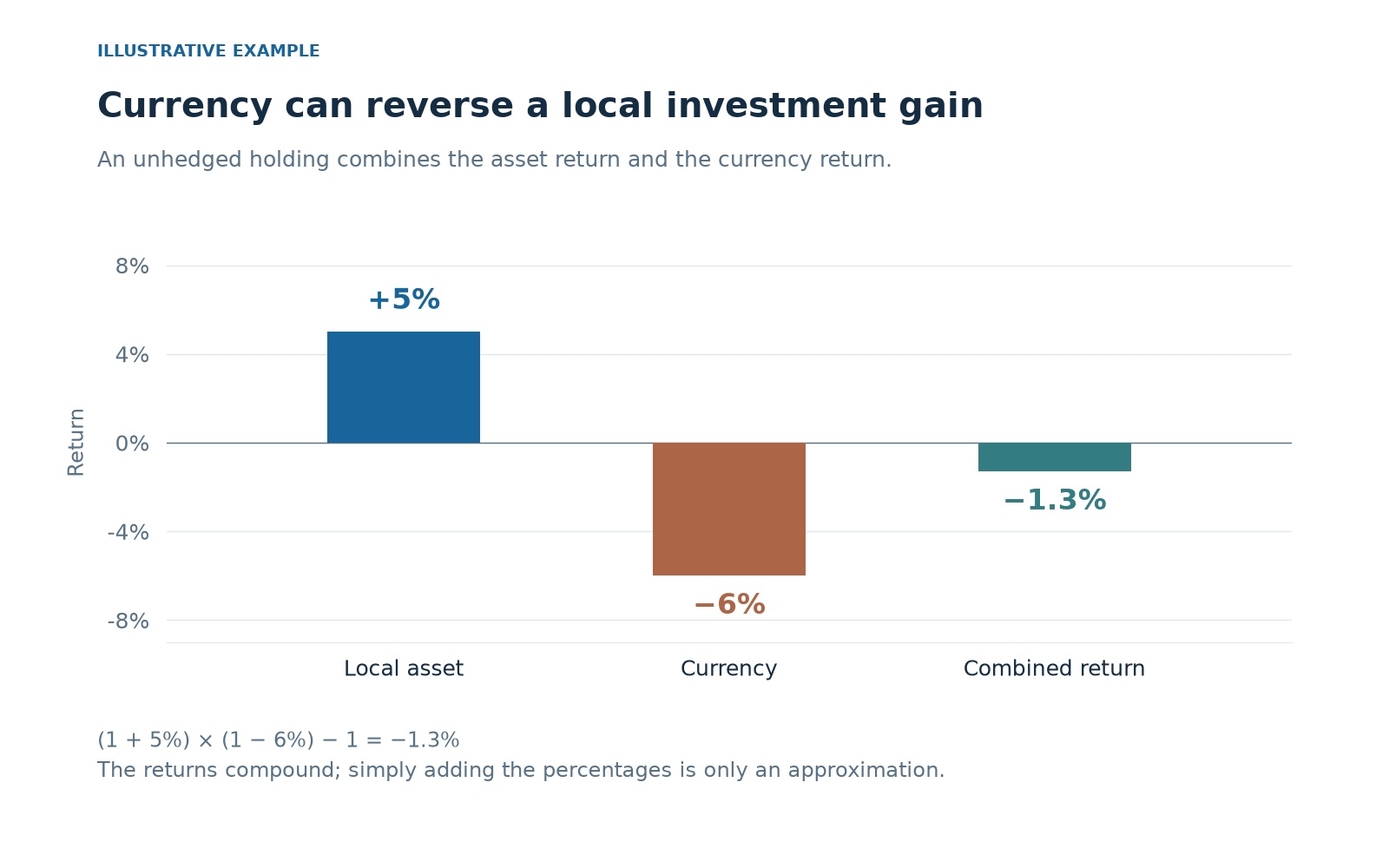
For an unhedged international holding, the home-currency return combines the local asset return and the currency return. In this example, a 5% local gain paired with a 6% currency decline produces a home-currency return of about negative 1.3%: 1.05 multiplied by 0.94, minus one. Simply adding the percentages is an approximation.
Hedging changes the exposure but is not free or perfect. Contract pricing, transaction costs, timing, and the amount hedged can all affect the result. A hedge designed around today’s asset value may need adjustment after markets move.
Read the cause as well as the move
A currency rising on stronger productivity sends a different signal from one rising during a global scramble for liquidity. Neither mechanism can be identified from the exchange rate alone. A useful analysis connects the move to trade, funding, and earnings before drawing conclusions about national competitiveness or portfolio protection.
Related research

ResearchGlobal Macro
Fiscal Support Today, Financing Questions Tomorrow
A framework for evaluating public spending without reducing the debate to one debt ratio.

ResearchGlobal Macro
Productivity Gains Need a Route Into Earnings
Why an attractive technology narrative still requires evidence about costs, adoption, and demand.

ResearchGlobal Macro
When an Energy Shock Becomes a Broader Inflation Problem
Separating an immediate price jump from persistent economic effects.