
ResearchFixed Income
A Bond Fund’s Yield Is Not Its Promised Return
- Report or archive date
- Archive placement October 8, 2026
- Reading time
- 1 min read

Summary
Understanding the difference between portfolio income, changing prices, and an investor’s holding period.
A bond fund combines many securities into a continuously managed portfolio. Its quoted yield can help describe income characteristics, but it is not a contractual promise to an investor. Returns also depend on changes in bond prices, expenses, defaults, and reinvestment.
Match the number to its definition
Funds can display several yield measures based on different calculation periods and assumptions. A trailing distribution rate answers a different question from a standardized current-income measure. Comparing them without reading the definitions can produce a false ranking.
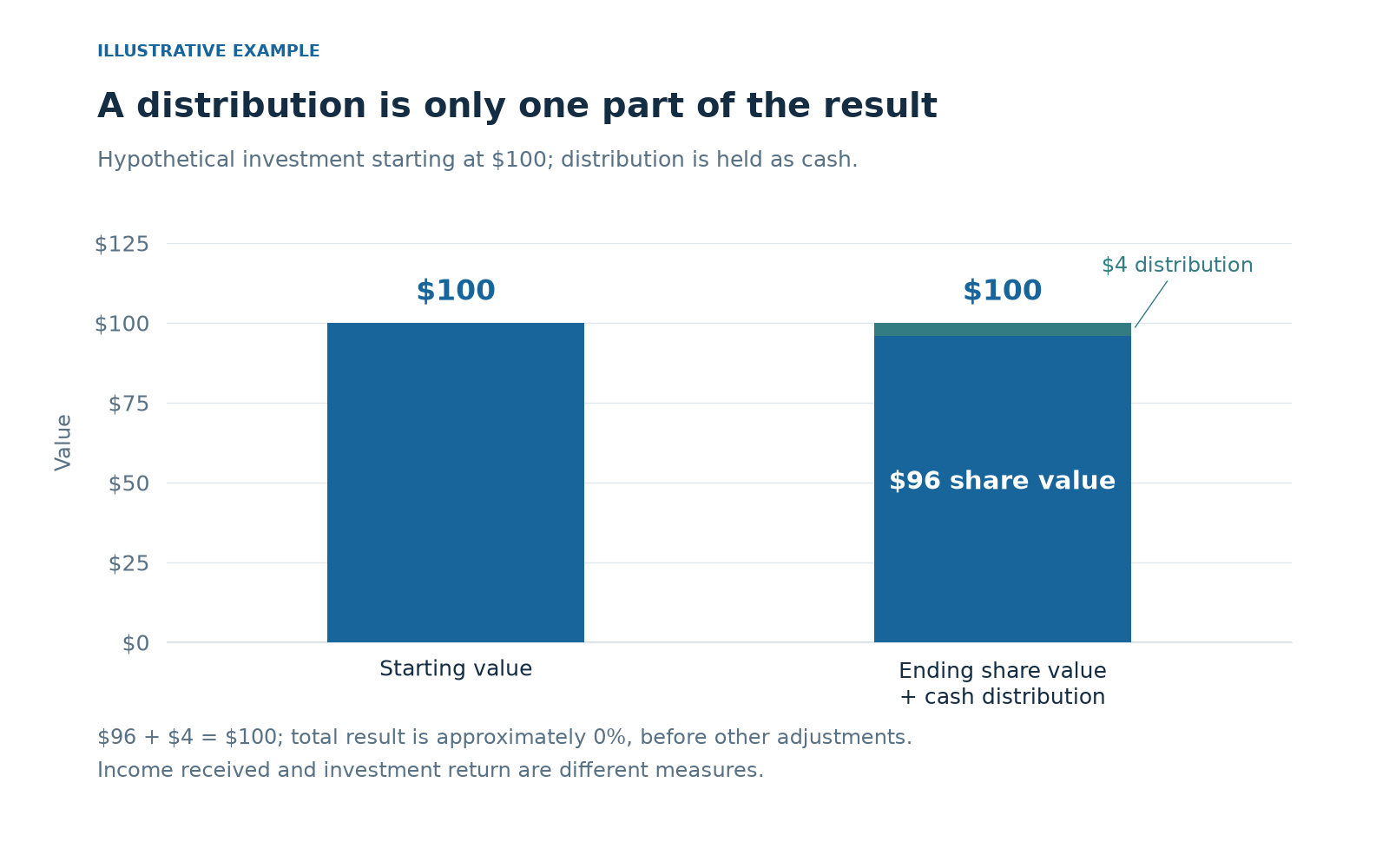
The underlying bonds remain exposed to issuer credit quality and market rates. A fund can distribute income while its net asset value declines. Receiving a payment does not establish that total wealth increased by the amount of the distribution.
Consider a fund that distributes $4 during a year while its share value falls from $100 to $96. Before reinvestment and any other adjustments, the investor’s total result is approximately flat, not a 4% gain. The example illustrates why income and total return must be considered together.

Understand the portfolio’s ongoing life
Unlike an individual bond held to its maturity, a conventional bond fund generally continues operating and replacing securities. Its duration, credit mix, and income profile can change. Some target-maturity products are structured differently, so the actual mandate must be checked rather than assumed.
ETF trading introduces another distinction: the exchange price can differ from net asset value, and transaction costs can include a bid-ask spread. Ease of trading does not guarantee a sale at yesterday’s price or at the underlying portfolio’s estimated value.
Evaluate the intended role
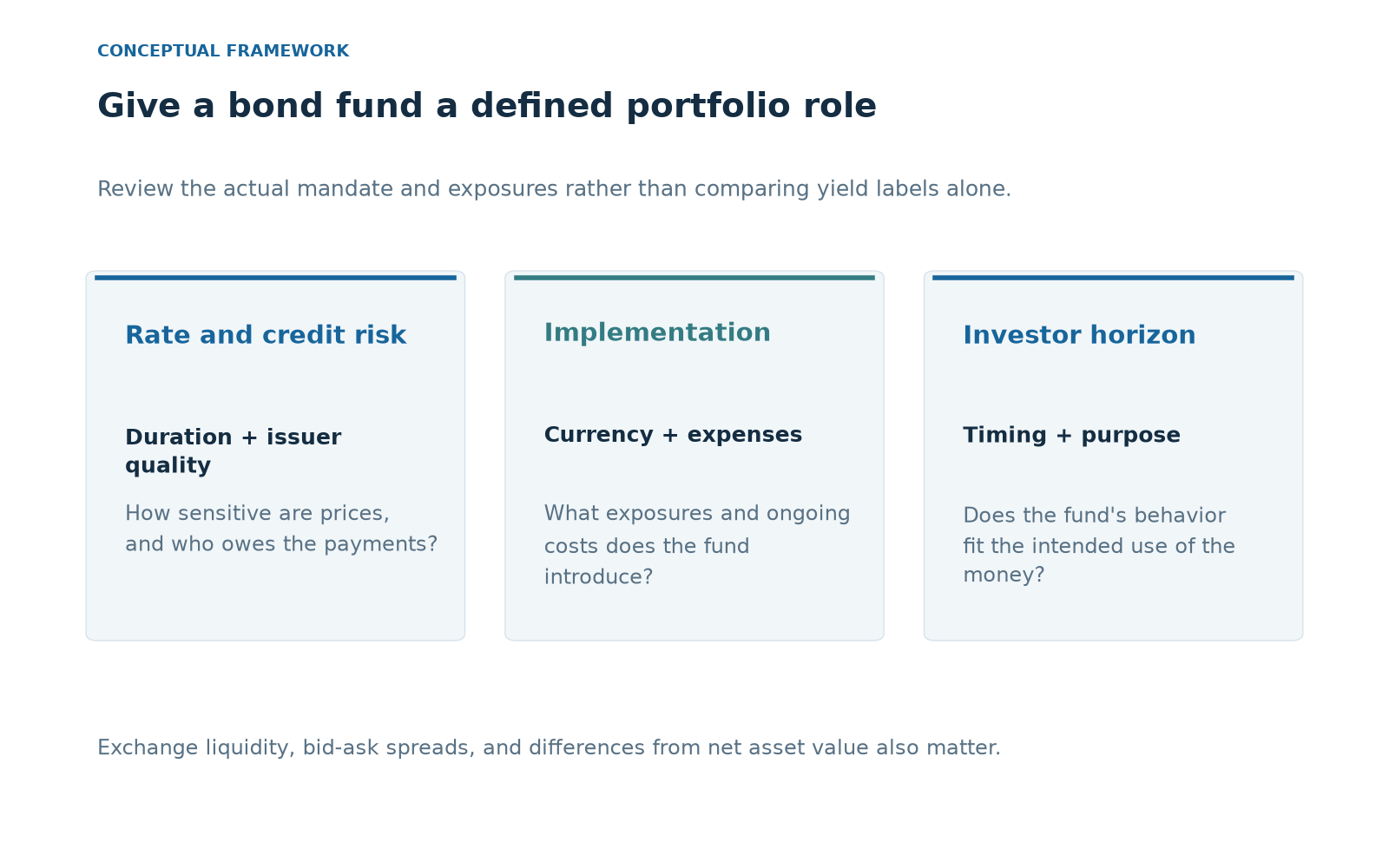
A useful comparison examines duration, credit exposure, currency policy, expenses, and the investor’s horizon. A high distribution rate may reflect additional risk or a particular distribution policy. The central question is whether the fund’s risk profile fits the job it is expected to perform. Yield is one input to that assessment, not a substitute for it.
Related research

ResearchFixed Income
Cash Has Reinvestment Risk Too
A stable balance today does not lock in tomorrow’s income.

ResearchFixed Income
What TIPS Protect—and What They Leave Exposed
Inflation adjustment is a contractual feature, not a guarantee of a stable market value.

ResearchFixed Income
A Credit Spread Is Compensation, Not a Cushion You Can Spend Twice
Assessing the extra yield on corporate debt requires separating credit and interest-rate risks.