
ResearchMarket Sentiment
A Crowded Position Is a Vulnerability, Not a Countdown
- Report or archive date
- Archive placement April 30, 2026
- Reading time
- 1 min read

Summary
Positioning data can identify potential pressure without telling you when it will unwind.
A popular trade may become vulnerable when many investors depend on the same outcome. That vulnerability does not tell an analyst when the trade will reverse. A crowded position can remain profitable for a long time if the underlying cash flows or policy environment continue to support it.
Respect the reporting lag
The CFTC’s Commitments of Traders reports generally reflect Tuesday positions and are released on Friday, with holiday exceptions. Trader categories describe business classifications, not a verified explanation of every position. A Friday headline can therefore summarize exposures that existed several days earlier.
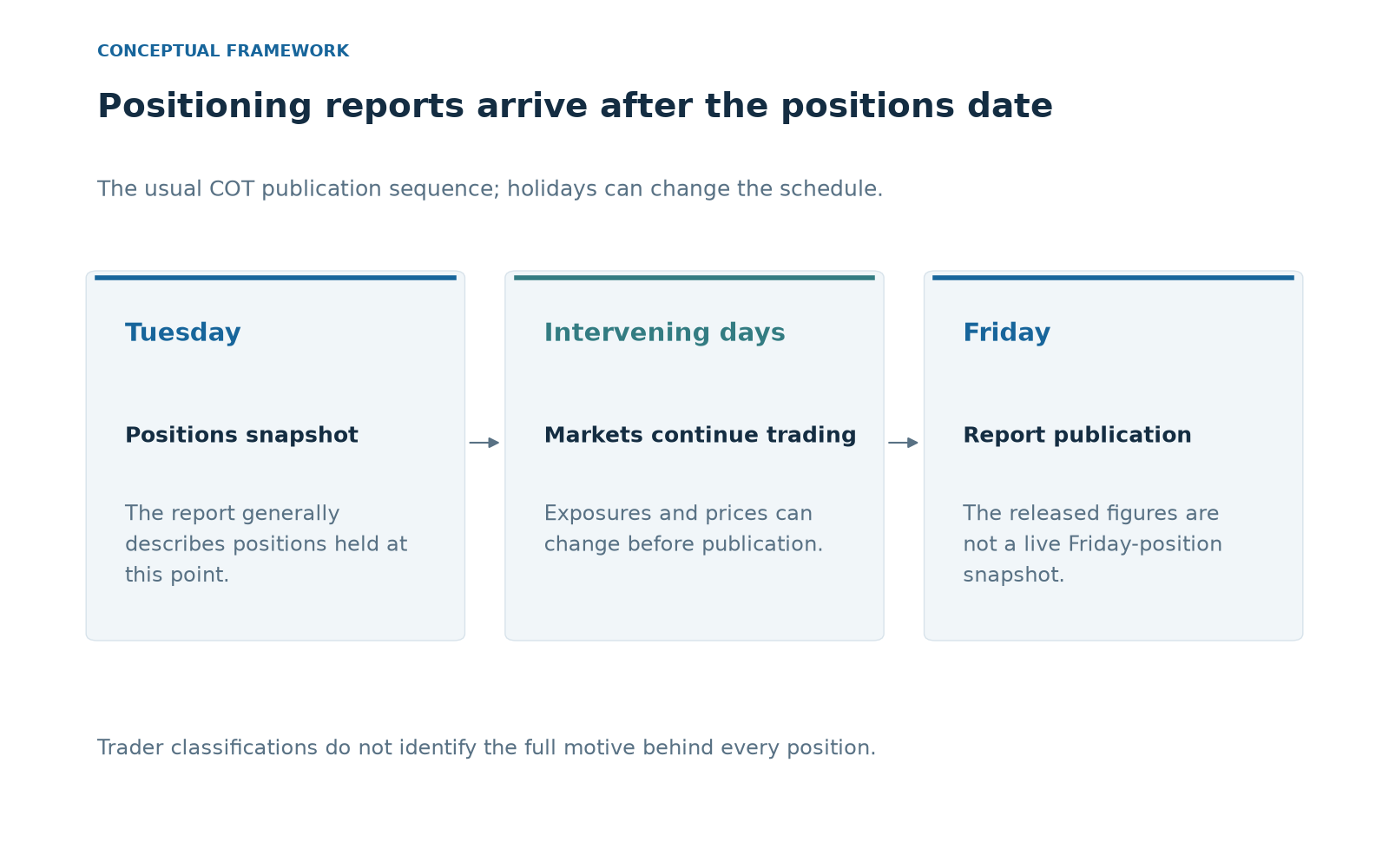
Net positions also conceal gross positions. A group with substantial longs and shorts can have a small net exposure while still carrying meaningful funding or basis risk. Changes in classification or participation can further complicate comparisons.
What Could Force Investors to Unwind Crowded Positions?
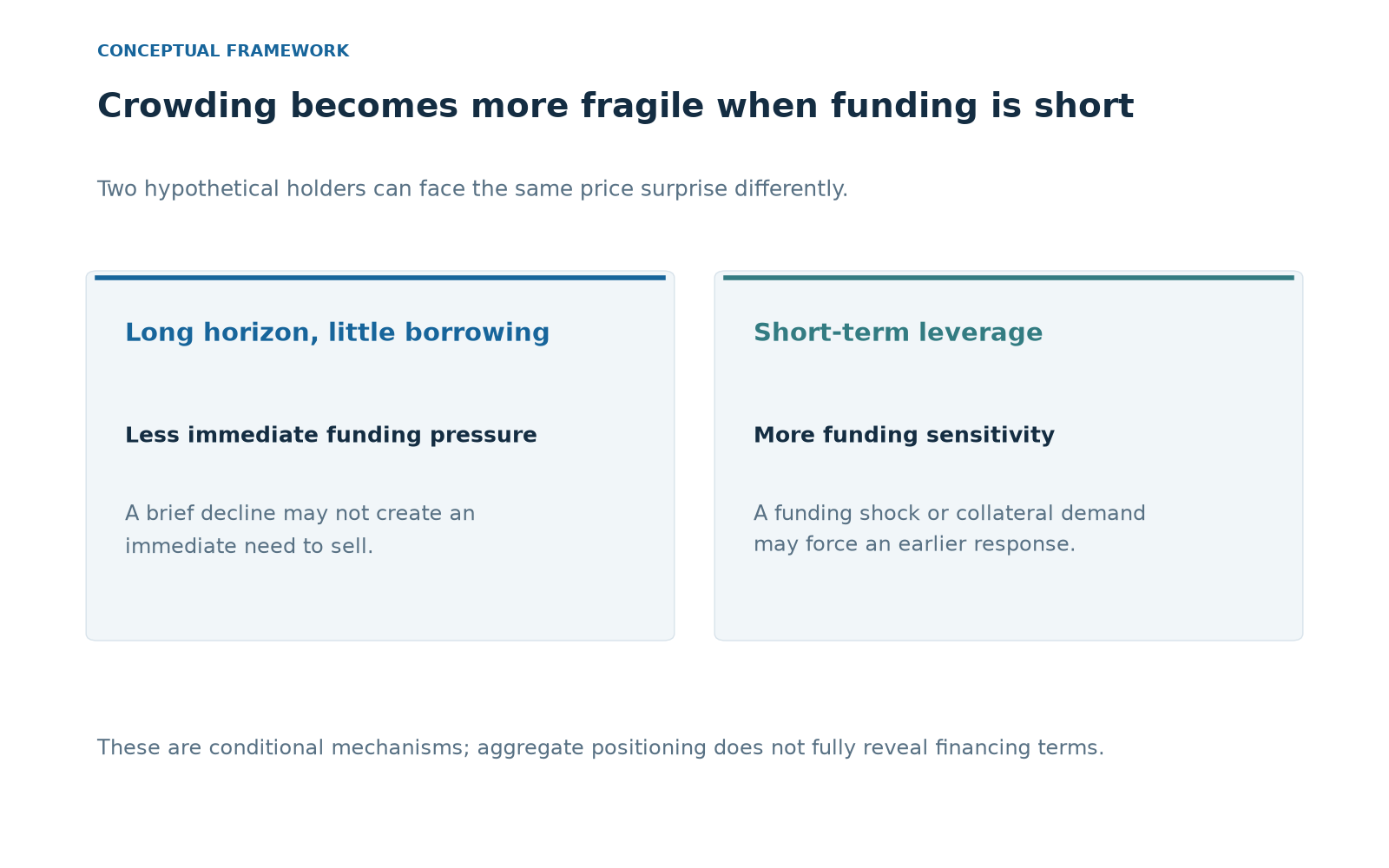
The relevant question is what could force investors to change the position. Margin calls, redemptions, risk limits, financing costs, or a change in fundamentals can all matter. Mere popularity does not produce a forced sale.

Consider a trade held mostly by investors with long horizons and little borrowing. It may be crowded but relatively resilient to a brief price decline. The same exposure financed with short-term leverage could be more sensitive to a funding shock. Public aggregate data may not reveal that distinction fully.
Use positioning as a scenario input
An analyst can ask how a surprise would interact with existing exposure. A favorable surprise in an already heavily owned asset may attract less incremental demand than expected. An adverse surprise may produce larger selling pressure if positions are leveraged. These are conditional mechanisms, not forecasts.
The strongest conclusion states the observed exposure, the reporting limitations, and the possible catalyst. It avoids treating a historical percentile as a clock. Positioning analysis is most valuable when it explains how a market could react to new information, while leaving open whether that information will arrive.
Related research

ResearchMarket Sentiment
Confidence Surveys Describe Views, Not Committed Capital
What respondents say and what their portfolios can do are separate pieces of evidence.

ResearchMarket Sentiment
Being Contrarian Requires More Than Disagreeing
An unpopular view needs a mechanism, evidence, and the capacity to survive being early.

ResearchMarket Sentiment
What the VIX Can Tell You About Uncertainty
An options-based volatility measure is not a directional forecast for stocks.