
ResearchEquity Strategy
An Earnings Beat Is Only the Beginning
- Report or archive date
- Archive placement January 22, 2026
- Reading time
- 2 min read

Summary
A practical framework for distinguishing operating progress from accounting and expectation effects.
A company can exceed an earnings estimate without improving its long-term economics. The estimate may have been lowered, the share count may have fallen, or a temporary item may have boosted profit. An earnings release becomes useful when the analyst explains how the result was produced and whether it can persist.
Reconstruct the business result
Begin with revenue, operating costs, financing costs, and taxes. Then connect reported income to cash generated by the business. The SEC’s financial-statement guide distinguishes the income statement from the cash flow statement; profit and cash receipts are not identical measures.
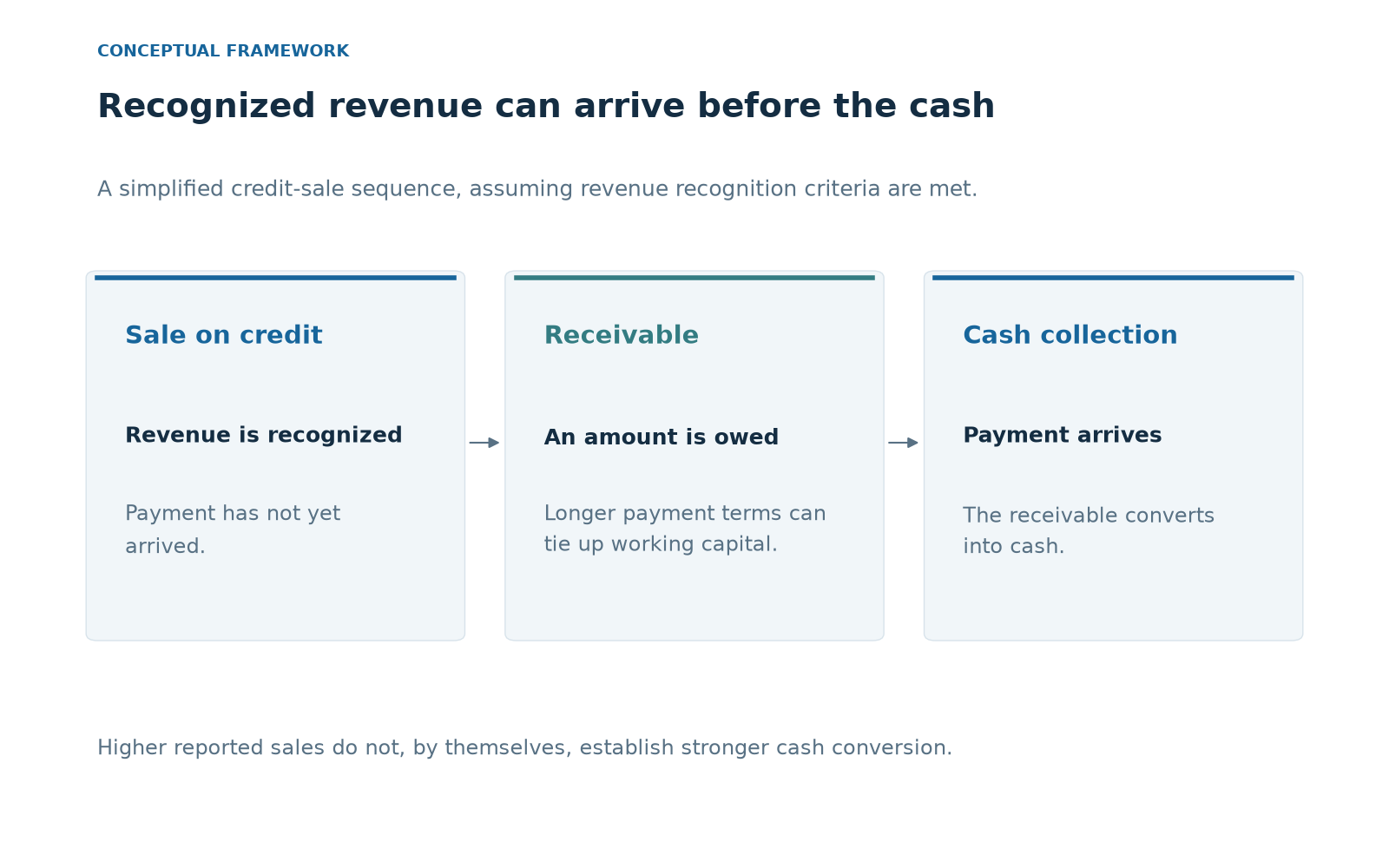
Suppose a company increases sales by offering customers much longer payment terms. Reported revenue rises, but accounts receivable also grows and operating cash conversion weakens. That does not prove the sales are unsound. It does mean the business is financing more of its customers’ purchases, which deserves explanation.
Similarly, a margin improvement can reflect better pricing, lower input costs, a favorable product mix, or postponed spending. The first three may be economically attractive, depending on durability. Delayed maintenance or reduced customer support could improve this quarter’s margin at the expense of future performance.

Put expectations back into the analysis
The market compares results with what was expected, not with an abstract definition of good. Strong growth can disappoint if the valuation assumes faster growth. Weak results can be received favorably if investors expected worse. Without a verified expectations dataset, an analyst should avoid declaring that a company beat or missed consensus.

A better earnings review states the operating changes directly and distinguishes management guidance from independently observed results. Guidance is a forward-looking claim with assumptions; it is not an accomplished outcome.
Define the next test
The follow-up questions should be specific. Will receivables convert into cash? Can margins hold when input costs normalize? Does capital spending support profitable growth or merely defend existing revenue? The objective is to identify the drivers of sustainable earnings and the evidence needed to assess them. One quarter can inform that judgment, but it rarely settles it.
Related research

ResearchEquity Strategy
A Low Price-to-Earnings Ratio Can Be Expensive
Valuation requires a view of earnings durability, not just a ranking of multiples.

ResearchEquity Strategy
Pricing Power Must Survive a Customer’s Response
Higher prices improve a business only if volume, retention, and costs cooperate.

ResearchEquity Strategy
Index Concentration Is a Portfolio Exposure, Not a Market Verdict
A rising index can depend on a narrow set of earnings drivers.