
ResearchCross-Asset Allocation
Diversification Depends on the Shock
- Report or archive date
- Archive placement February 26, 2026
- Reading time
- 1 min read

Summary
Assets that offset each other in one environment can decline together in another.
Diversification is often discussed as though correlations were permanent characteristics. In reality, relationships among assets can change when the dominant economic shock changes. A portfolio designed around one historical pattern may be less protected than its long-run averages suggest.
Identify the common driver
Spreading investments can reduce concentration, but it does not guarantee that losses will be avoided. The relevant question is which economic forces influence the holdings at the same time.
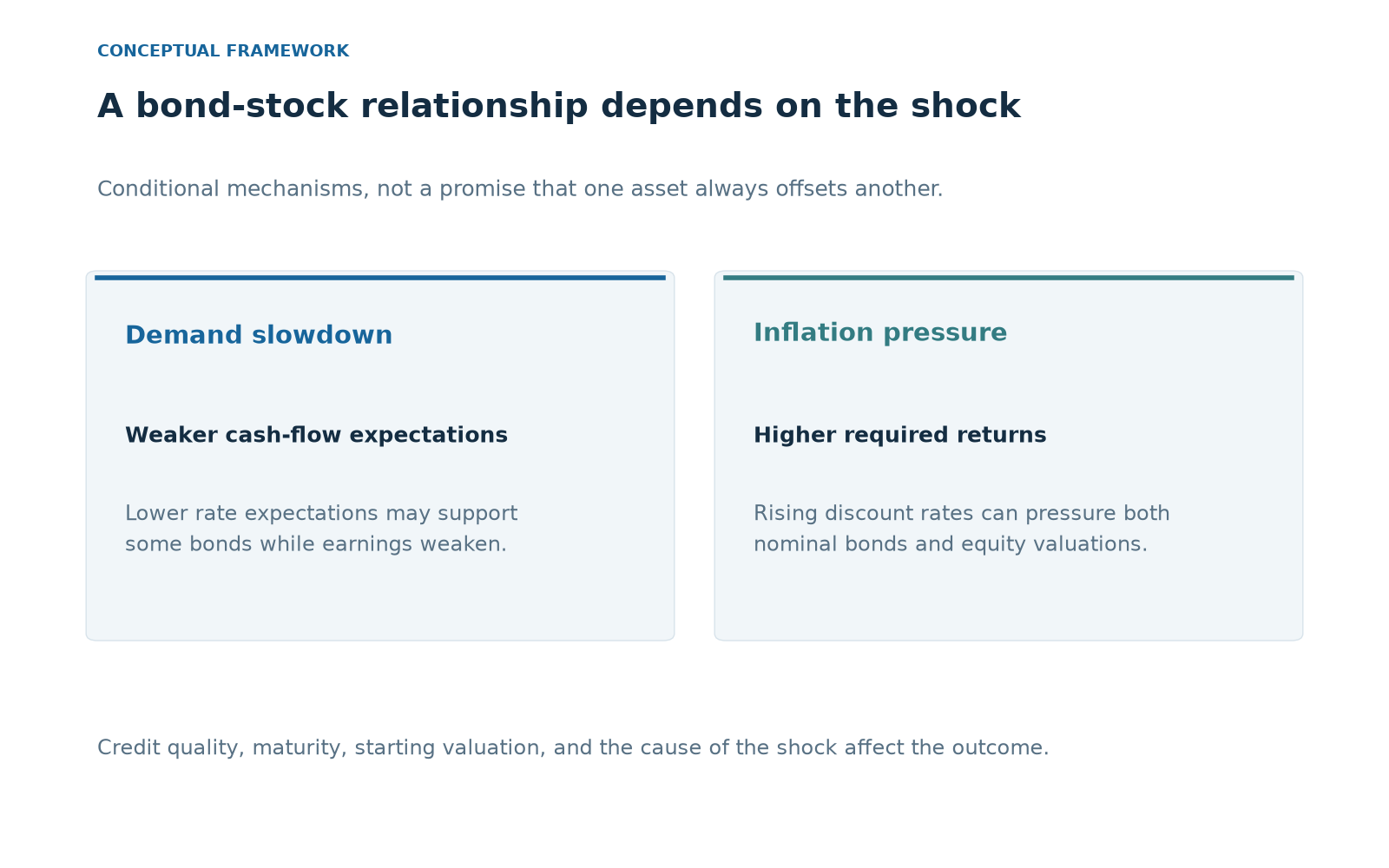
In a demand slowdown, weaker activity may reduce earnings expectations and encourage lower interest rates. Equities could weaken while high-quality nominal bonds benefit from falling yields. In an inflation shock, higher discount rates and rising costs could pressure both asset groups. These are mechanisms to examine, not predictions that every episode will follow the pattern.
Credit-sensitive bonds add another complication. They may respond to weaker corporate finances in ways that resemble equities, even though both government and corporate bonds sit inside the fixed-income category.
Test several relationships
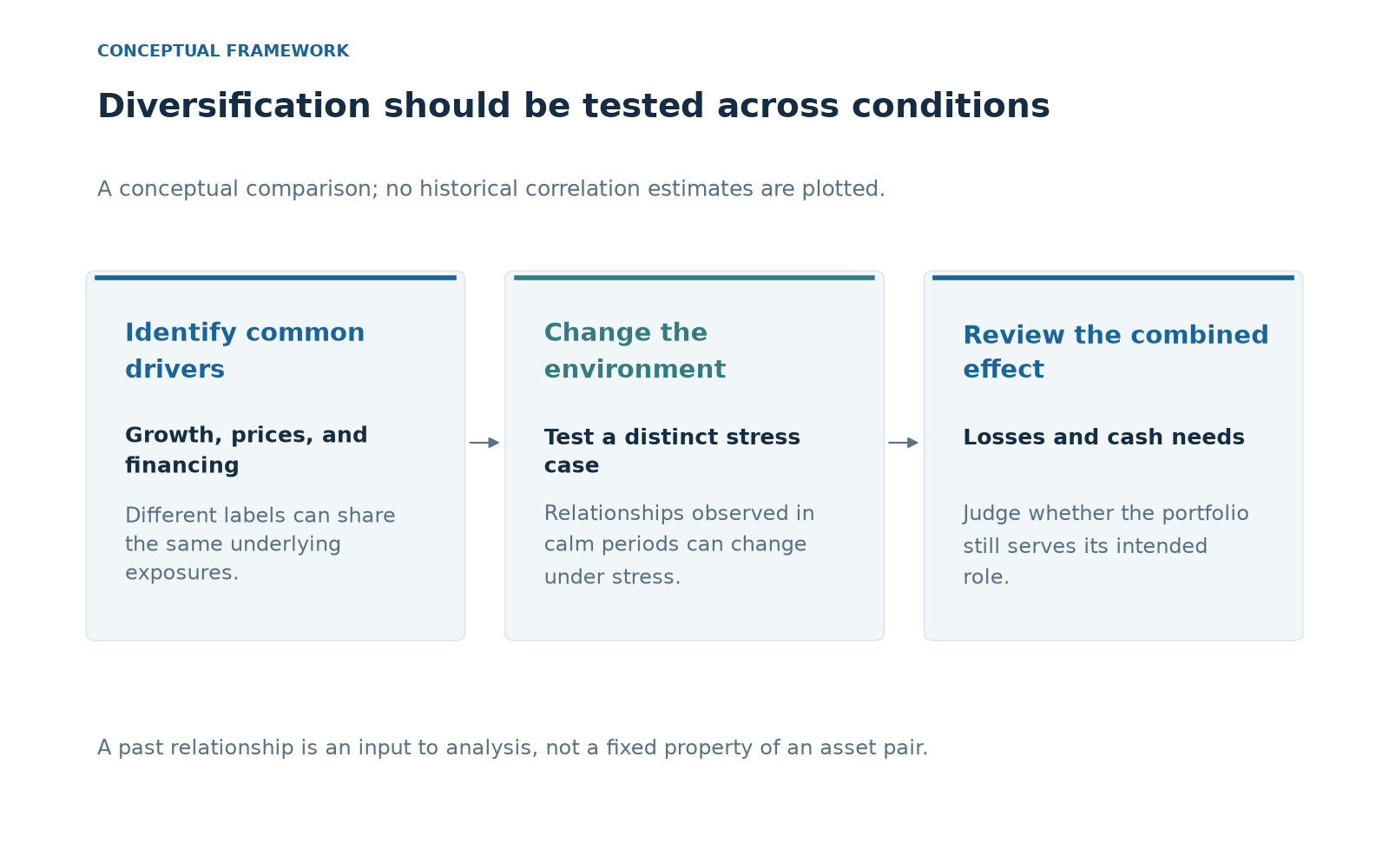
A historical correlation estimate depends on the observation period, frequency, and market environment. Monthly data can hide short episodes of simultaneous losses that matter to an investor with immediate liquidity needs. A long sample may average together very different regimes.
An analyst can therefore supplement historical estimates with explicit scenarios. What happens if inflation rises while growth slows? What if real yields increase because productivity improves? What if a liquidity shock temporarily pressures assets that normally diversify one another?

Design for survivability
The objective is not to locate a perfect hedge for every event. Such protection may be unavailable or too costly. The objective is to understand where diversification is likely to help, where it may weaken, and how much loss the portfolio can absorb.
A clear allocation review identifies shared drivers and potential correlation changes. It avoids treating a negative historical relationship as a contractual promise. Diversification becomes more credible when the portfolio can tolerate the periods in which its usual offsets fail.
Related research

ResearchCross-Asset Allocation
Give Every Asset a Job Before Giving It a Weight
Portfolio design starts with liabilities and risk capacity, not a list of attractive markets.

ResearchCross-Asset Allocation
Rebalancing Is a Risk Decision Before It Is a Return Decision
A disciplined process restores intended exposure without pretending to forecast market turning points.

ResearchCross-Asset Allocation
Liquidity Is the Ability to Meet a Need, Not Just to Place a Trade
A portfolio can contain tradable assets and still be poorly prepared for cash demands.