
ResearchCross-Asset Allocation
Liquidity Is the Ability to Meet a Need, Not Just to Place a Trade
- Report or archive date
- Archive placement May 28, 2026
- Reading time
- 1 min read

Summary
A portfolio can contain tradable assets and still be poorly prepared for cash demands.
Liquidity is often reduced to whether an asset has a market price. For a real portfolio, the more important question is whether cash can be obtained in the required amount, at the required time, without an unacceptable loss or disruption. That makes liquidity a relationship between assets and obligations.
Distinguish access from certainty
An ETF may trade throughout the day, but its market price can differ from the underlying portfolio’s net asset value. The existence of an exchange listing does not guarantee that a sale will occur at a desired price during stress.
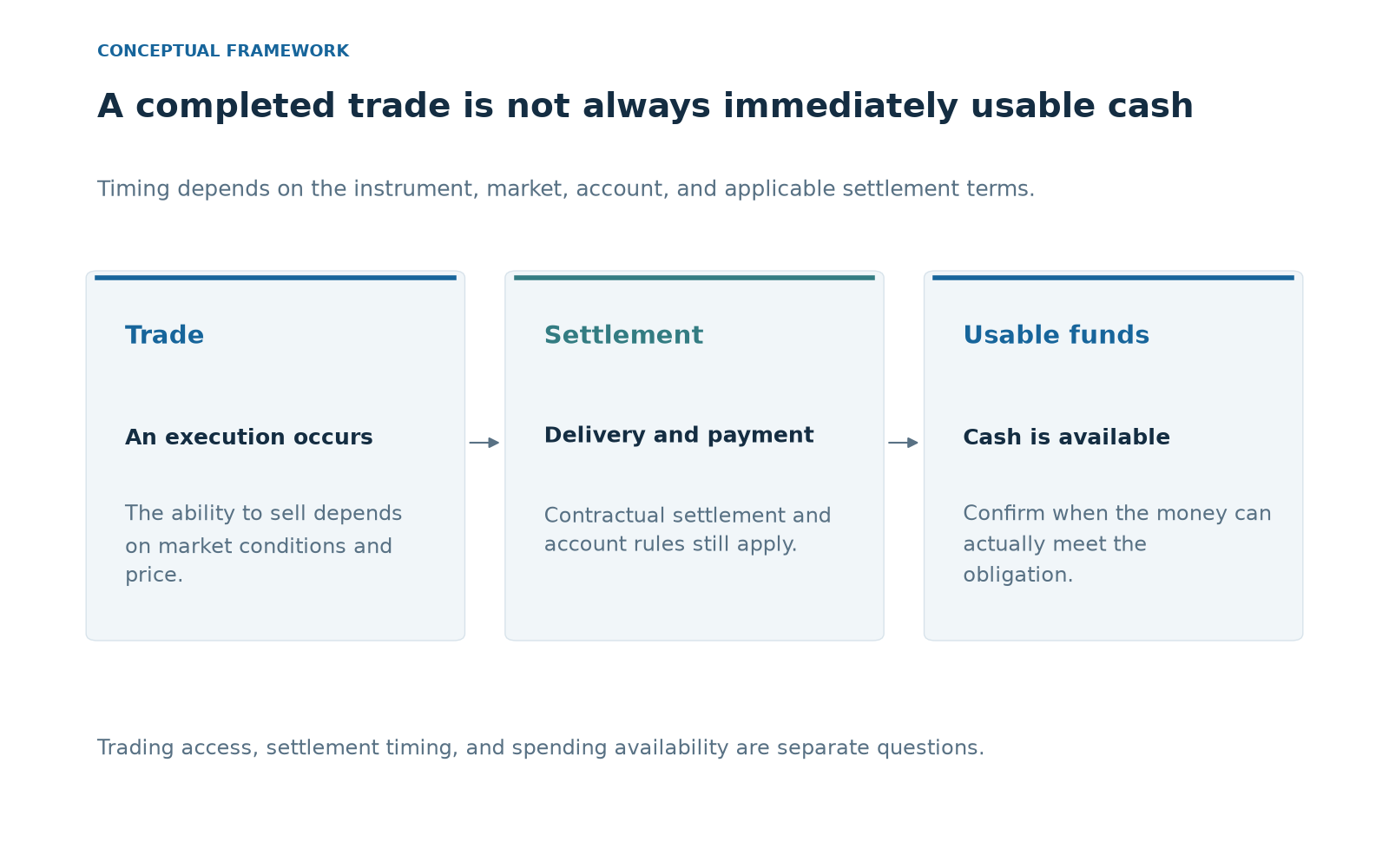
Similarly, a bond may have contractual maturity payments but limited secondary-market depth. A private investment may report a stable valuation while restricting withdrawals. Price stability and liquidity are not interchangeable properties.
Map the cash demands
Consider a portfolio with annual spending, collateral requirements, and a commitment to fund a private investment. Those demands can arrive together during a market decline. If every liquid asset must then be sold, the portfolio may lose the ability to maintain its longer-term strategy.

A useful review distinguishes known payments, plausible contingencies, and discretionary commitments. It also examines settlement timing, redemption terms, and the availability of credit. Borrowing can bridge a timing mismatch but can introduce its own refinancing and collateral risks.
Test Falling Asset Prices and Rising Cash Needs Together
Liquidity planning should consider both falling asset prices and rising cash demands. A scenario that assumes only one of the two may understate the problem. The question is what could be sold, how much might be raised after a conservative haircut, and what exposures would remain afterward.
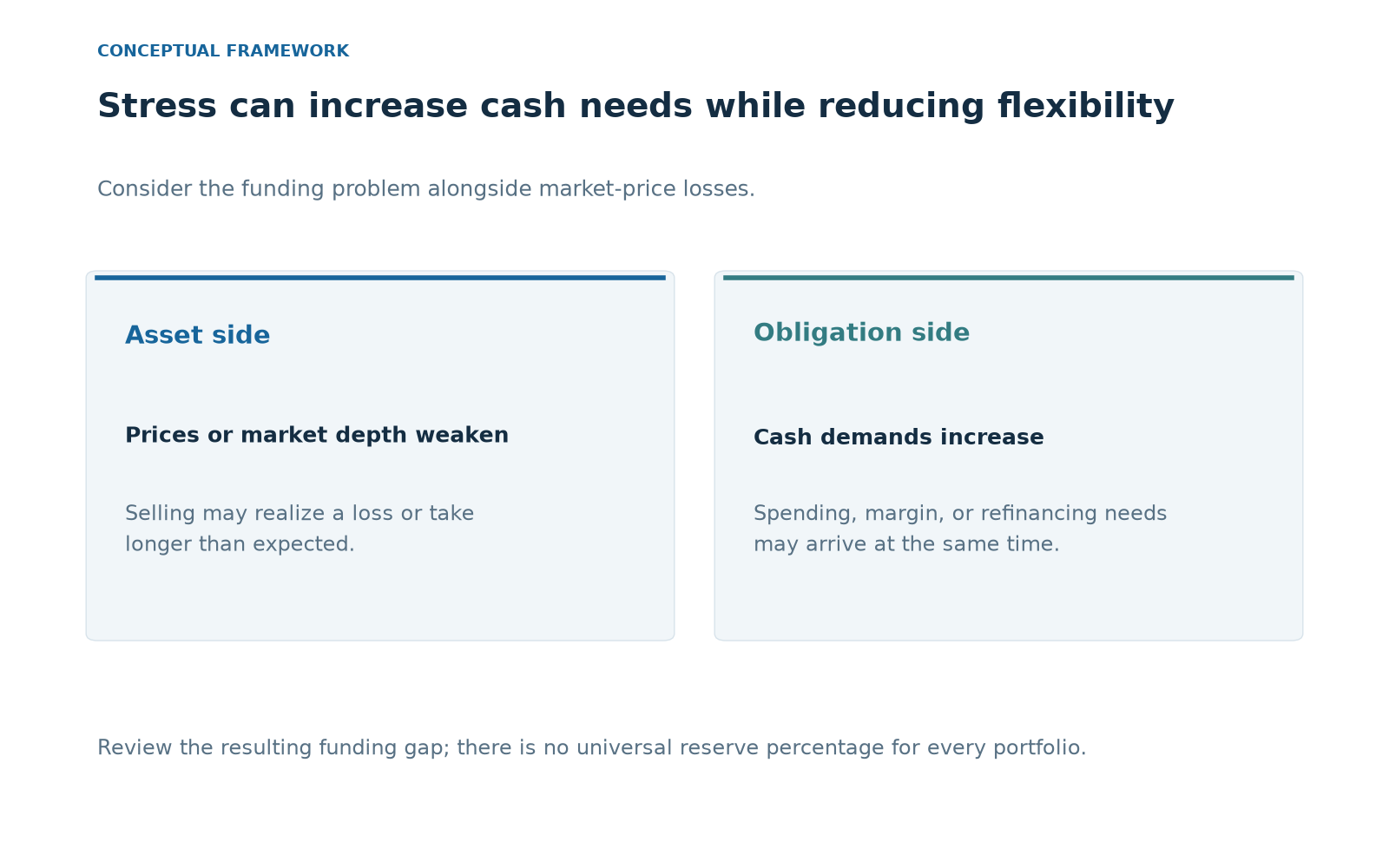
Holding reserves has an opportunity cost, but the value of flexibility is most visible when markets are difficult. The appropriate reserve depends on the obligation, not on a universal percentage.
A strong allocation note explains how the portfolio will meet near-term needs while preserving the ability to hold long-term investments. That operational capacity can matter more than a small improvement in an expected-return estimate.
Related research

ResearchCross-Asset Allocation
Rebalancing Is a Risk Decision Before It Is a Return Decision
A disciplined process restores intended exposure without pretending to forecast market turning points.

ResearchCross-Asset Allocation
International Diversification Needs a Currency Policy
The asset decision and the exchange-rate decision should be evaluated separately.

ResearchCross-Asset Allocation
Diversification Depends on the Shock
Assets that offset each other in one environment can decline together in another.