
ResearchCross-Asset Allocation
International Diversification Needs a Currency Policy
- Report or archive date
- Archive placement July 9, 2026
- Reading time
- 1 min read

Summary
The asset decision and the exchange-rate decision should be evaluated separately.
Buying overseas assets changes more than geographic exposure. It can add a currency position, alter sector weights, and introduce different legal or market structures. A portfolio review should separate those effects instead of attributing the entire result to international diversification.
Start with the Currency of Future Spending and Obligations
The currency in which an investor expects to spend is the natural reference point for evaluating purchasing power. Asset allocation depends on the investor’s horizon and objectives. Those objectives may be denominated in one currency even when investments span many countries.
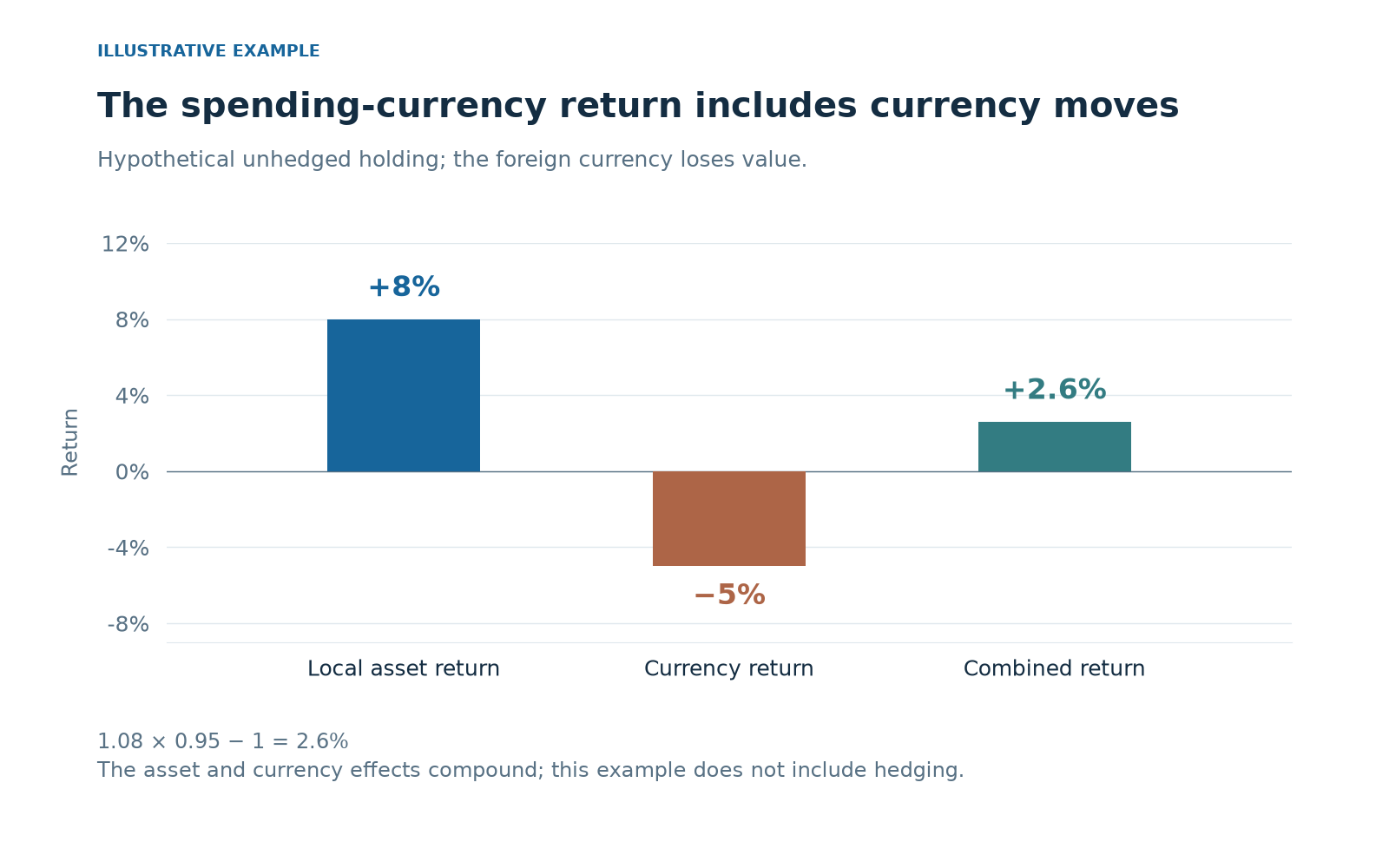
In a case, an overseas asset gains 8% in local currency while that currency falls 5% against the investor’s spending currency. The unhedged return is about 2.6%, calculated as 1.08 multiplied by 0.95, minus one. Currency exposure substantially changes the result without changing the underlying company or bond.
Consider what a hedge does
A currency hedge can reduce a specified exchange-rate exposure over a specified period. It also introduces costs, contract pricing effects, and the need to maintain the hedge as portfolio values change. The result depends on the instruments and implementation; it is not simply the local asset return with currency risk erased at no cost.

The appropriate policy can differ by asset class. Currency volatility may dominate a low-volatility foreign bond holding, while an equity investment already carries substantial business risk. That observation supports separate analysis, not a universal instruction to hedge one category and leave another unhedged.

Make the decision consistent
A policy can define the target hedge ratio, the review frequency, and the circumstances that would justify a change. Without such a framework, currency decisions can become reactions to recent performance.
The research conclusion should identify the role of overseas assets, the currency mismatch they introduce, and the intended treatment of that mismatch. Geographic diversification is more meaningful when the investor knows which risks have been diversified and which new risks have been accepted.
Related research

ResearchCross-Asset Allocation
Liquidity Is the Ability to Meet a Need, Not Just to Place a Trade
A portfolio can contain tradable assets and still be poorly prepared for cash demands.

ResearchCross-Asset Allocation
Build Scenarios Around Mechanisms, Not Dramatic Labels
A useful stress test explains how a shock reaches prices and cash flows.

ResearchCross-Asset Allocation
Rebalancing Is a Risk Decision Before It Is a Return Decision
A disciplined process restores intended exposure without pretending to forecast market turning points.