
ResearchMarket Sentiment
When the News Feels Worse Than the Portfolio Evidence
- Report or archive date
- Archive placement November 5, 2026
- Reading time
- 1 min read

Summary
Separating attention, uncertainty, and measurable exposure during a dense news cycle.
A stream of alarming headlines can make uncertainty feel continuous. Markets, however, respond to the implications of information relative to expectations and existing prices. The intensity of the news experience is not a reliable measure of the size of a portfolio’s economic exposure.
How News Can Affect Cash Flows, Financing, and Valuations
The first question is how the event could affect cash flows, discount rates, financing, or liquidity. A geopolitical development may matter through energy costs, trade routes, or risk appetite. A policy announcement may matter through taxes, regulation, or interest rates. Without a transmission channel, the headline remains context rather than a portfolio conclusion.

The Federal Reserve’s October statement retained a 3.75%–4.00% target range while describing inflation as elevated. The useful analytical task is to connect that policy setting to borrowers, savers, and valuations, rather than infer a market reaction from the tone of coverage alone.
Separate what happened from what might happen
A factual observation, a plausible scenario, and a confident forecast should not be presented in the same voice. If a supply disruption could raise costs, state the conditions required. If a company has already reported higher costs, identify the evidence. The distinction helps readers understand how much of the argument remains uncertain.

Repeated coverage can also create the impression of repeated new information. Several articles discussing the same announcement do not constitute several independent confirmations. The underlying source and timestamp matter more than the number of headlines.
Revisit the portfolio’s actual sensitivities
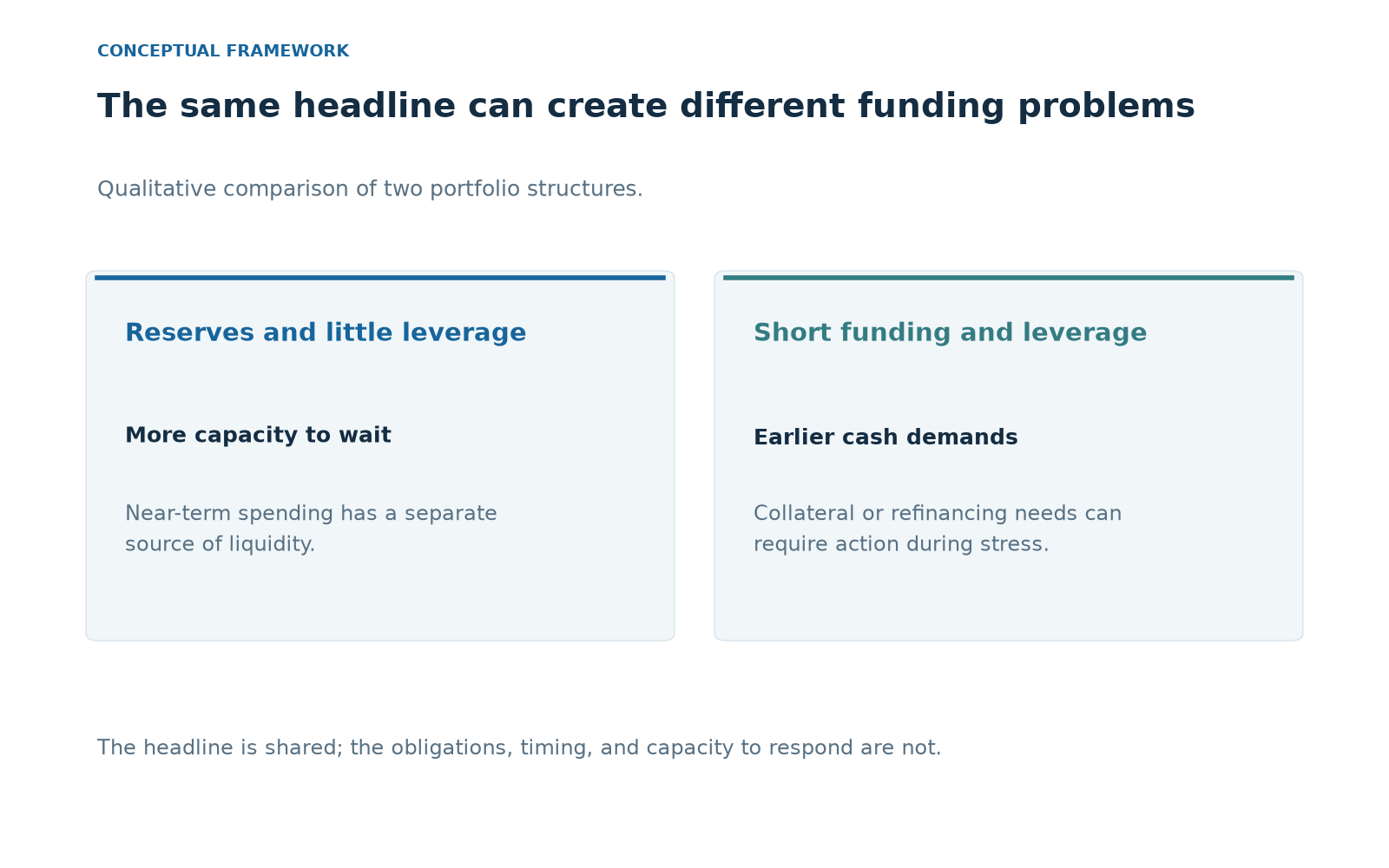
A portfolio with little leverage and near-term spending reserves faces a different problem from one dependent on immediate refinancing. Both investors read the same news, but their capacity to absorb uncertainty differs.
A useful response is to review assumptions, exposure, and liquidity before changing positions. The goal is not to ignore news. It is to convert attention into a testable analysis of consequences. That process can justify action, patience, or further research without allowing the emotional weight of coverage to stand in for evidence.
Related research

ResearchMarket Sentiment
Market Breadth Adds Context to an Index Move
Participation can reveal the structure of a rally without proving its next direction.

ResearchMarket Sentiment
Being Contrarian Requires More Than Disagreeing
An unpopular view needs a mechanism, evidence, and the capacity to survive being early.

ResearchMarket Sentiment
A Crowded Position Is a Vulnerability, Not a Countdown
Positioning data can identify potential pressure without telling you when it will unwind.